


Most of us still think of truth as something like reason or logic, as derived from a reality that sits outside of the social hurly-burly.
It’s something solid and consistent. It can’t be challenged because it must always be the case regardless of the circumstances. The problem here is that nothing could be further from the … well … truth.
Even a cursory review of history, such as the one we took last time, shows truth as malleable. It never sits still and is always on the move. It’s linked to where we live, what we experience and what culture and ideology are telling us.
It’s also more than one state, meshed together, one where power, truth and knowledge operate in partnership, dependent on each other.
Is truth temporary?
In general terms, history tells of an increasingly productive but highly potent power-truth, two separate things that always work together. Over the years, it has given us greater knowledge about the world but we’ve had to accept more invasive and strictly policed levers of control and compliance in order to get it. No, it’s not always clear who the gatekeepers and controllers of this might be.
Now, modern society seems to be asking us to add ‘information’ to our power-truth-knowledge relationship. This is something less than knowledge, un-purposed data that derives meaning only from the context or interpretation placed on it and therefore capable of supporting contrary ideas in the same moment. Together, the coming together of these four different things is making social life very complicated indeed.
Regardless of how these things are joined or even if they’re not, it would certainly seem logical for any emerging construction of truth to continue to ensure power retains the capacity to change opinions, formulate purposes and reveal preferred or selected consequences. At the very least, there’s money to be made here.
Whatever is going on makes power ubiquitous but also very opaque or covert. The power-truth partnership operates within the power-medium. This means it does try to show us who the bad guys are but it often doesn’t give us much of substance to pin on them.
This is because it seems to work with what experts call ‘diffuse accountability’. In other words, it acquires its value or potency from a variety of sources and it leverages control through highly networked, rapidly formed, and equally rapidly dissolved mechanics and outputs.
Power can then make some truth temporary, something reliable or useful only in the moment and not necessarily in the next.
Truth is painful
We are seeing the importance in discourse of networks and digitised relationships and associations. These are complex and more difficult to spot than we sometimes imagine but we can think of them perhaps as those enabled by X, Instagram or Facebook. These technologies have great power.
They use information currencies in ways that are extremely transient or nascent. On the one hand, they work algorithmically to satisfy our impulses and instincts but, on the other, they’re still the go-to entry point for many making more studious or thoughtful enquiries about the world around us.
This allows us to interrogate the power-truth relationship in the belief it’s something reasonable and dependable even when it offers a place too for the most fanciful or objectionable claims.
Indeed, these opposites are permitted to account for themselves on equal terms. It’s ‘us’ who must do the work needed to test their veracity, repeatability and value. Many networked systems don’t offer this any more.
Most of us seem to think that this extra work is too much trouble. We’re told that answers to society’s most challenging questions are reducible to 280 characters and that the substance of these can be verified simply by the quantity of screen impressions or the likes generated by the page we’re looking at.
All truths are presented as probabilities with identical degrees of significance. The power-truth arrangement tells us we should be capable of understanding social order, ecology or neuroscience at the touch of a button when real understanding is actually more dependent on the places we go searching for it and the amount of time we spend there.
Comte’s positivism (1848), his faith in the scientific method, has always put this type of effort, the discomfort of complexity, above the beguiling reassurance of the simplistic and this remains well justified today. Science has never been so nuanced, interconnected, ambiguous or open-ended or less like simple answers or common sense.
Truth emerges ‘before our very eyes’
Our relationship to the power-truth partnership is now increasingly tethered to modern technologies that value these highly distributed relations. It’s an arrangement that has no central order or single controlling lever but where patterns seem to appear from the interactions created within the whole.
Power here lies in the capacity to identify, connect, filter and navigate these vast relational webs and the currents they afford. Truth is what emerges from these patterns of connection and interaction and it forms in a state first that is more probabilistic than absolute.
These might be individual encounters or a small collection of them. They are likely to have little intrinsic power on their own and they’re often no more than fleeting, sometimes little more than imagined.
Truth circulating within networked technologies becomes opportunistic, capable of rapid change and reformulation, pulled towards matters of greater density, and power is access to what these more easily designated ‘mini-truths’ can be shaped to represent or suggest.
This shifts our power-truth-knowledge-information concoction from control, discipline and prediction to something like capacity for adaptation, resilience, and hitting small but multiple targets.
We may be moving from a modernist idea of truth as stable, controllable and universal to a late-modern or post-digital idea of truth as something emergent, contingent and negotiated across divergent and complex networks.
This poses new difficulties and uncomfortable consequences, ones we are yet to get to grips with fully or even acknowledge in many instances.
Truth has reality
At the moment, we may still feel power is aligned to forms of objective knowledge, positivism, and reliable and repeatable prediction. We should not be complacent about this nor let it go without a fight, and we’re certainly in one.
This is because our systems and technologies of knowledge now allow subjective or untested experiences to represent themselves as order even when they are no more than a sort of highly isolated, dissonant, rare, significantly prejudicial or almost meaninglessly atomised interpretation of a singular reality.
This micro or personalised power, which in the past would’ve been filtered from discourse by the reach of expert curation or throttled at birth by the weight and tests of reliable study, can now be easily identified, utilised rapidly, commodified and shared.
At any point after this, this singular truth can be more easily adopted and exploited through the power-medium, presenting itself as valid even when it is no more than momentary, incapable of proof and even when modernist forms of ‘truth’ state it actually has no sense or persistent veracity.
Truth is balance
History tells us that the ‘enlightenment’ notion of truth gave us clarity and universality but often erased complexity when it did so. The systems era gave coherence and expanded explanatory power but often imposed rigid controls that constrained useful relativism or difference.
The information era offered improved efficiency and prediction but tended to show dissonance as no more than echos or noise in the machine. More recently, the idea of emerging networks and complexity offers us all greater flexibility and inclusiveness but currently risks relativism and instability.
The form of truth we too often adopt today, it appears, seems to be less about a carefully consolidated, aggregated and authoritative account. Instead, it is a product of divergence, multiplicity and loosely collectivised contradictions.
It is a series of wayward iso-facts. It is not treated as complete ignorance or prejudice because it can be validated via technologies capable of curating a supportive reaction in compelling quantity, even when it is nothing more than subjective or individual experience.
Yet, this does not force us to accept it, to make truth somehow more capricious, shifting, rudderless or regressive. Truth remains repeatable, so that the more remarkable a claim, the more its truth must be tested and shown to prevail (Truzzi).
In the digital arena, it is vital that truth remains what is vigorous and sturdy, what succeeds across contexts. It is not our instincts, fears, lusts or applause and it is certainly not the capacity to express or corral these into a single, universally expressive moment across many people despite what our technologies can deliver.
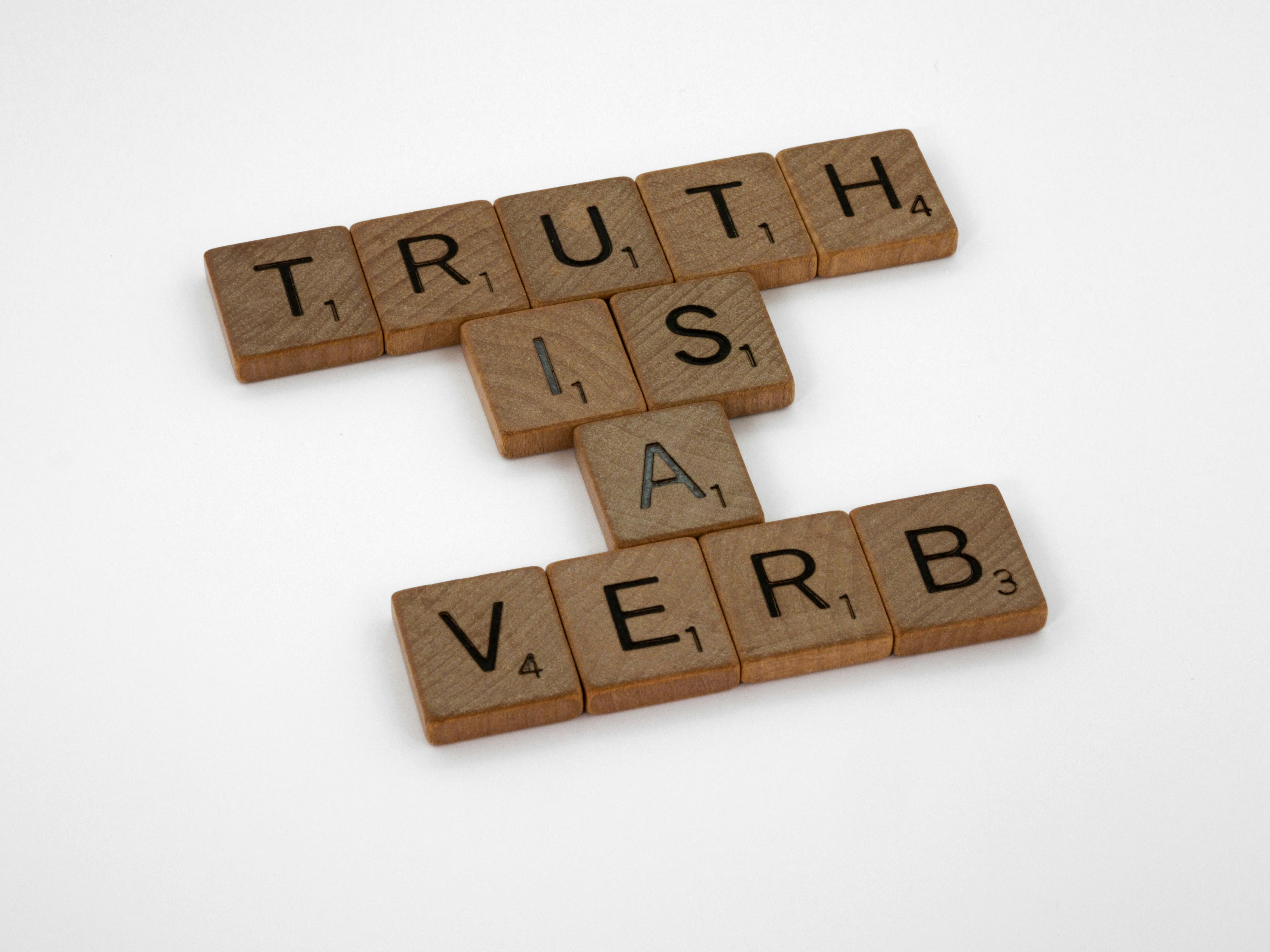
Truth must survive multiple perspectives, multiple data streams and multiple scales. It can be electrifying but it’s usually slow, incremental, diverse and demanding. We have to ask if we want our truth to become less like a noun, a fixed object, and more like a verb, acting relative to different states and conditions.
It’s probably useful for it to be a bit of both and perhaps it’s important to allow this. The point is that we can’t discard one simply to allow the other to prevail.
Truth is never satisfying
We might be best minded then to think of truth today as something that’s resilient to circumstances. Truths are not the eternal and unquestionable categories of old but designs robust enough to persist across different sites of analysis and negotiation in the power-medium.
We’re shifting from truth as a fixed order or highly managed system to truth as circulating information with an emergent property of objective value to us. It is the speed and significance of this emergence we must worry about, testing this and being watchful until reliability is established.
Such a shift reflects not so much a change in our ontological preferences but a reconfiguration of how power-medium shapes what humans count as true in the first place and probably always have done.
This will not be an easy transition for those of us who disdain what is no more than localised, aberrant, opinionated or self-reverential. Yet, we must learn to tolerate this as the flotsam and jetsam of the currents and energies we wish to examine and rely on.
Neither will it suit those who demand instant clarity. They must learn anew the value of expertise and critical thinking and accept complexity as the hallmark of reality. They must tolerate the never truly satisfying presence of ambiguity and uncertainty.
Perhaps it is this which the power-medium is trying to reveal to us.
References
Comte, A. 1848. A General View of Positivism. Translated by J. H. Bridges. London: Trübner and Co. (Reprinted 2009, Cambridge: Cambridge University Press).
Truzzi, M. 1978. ‘On the extraordinary: An attempt at clarification’, Zetetic Scholar, 1(1), pp. 11–19.
Image: Brett Jordan


